6 Very Convincing Signals That Prove It’s Time To Restart Your Hotel Marketing In May

SHARE:

*May 11th Update*

  • Online transactions have increased 37% week over week while sessions have remained flat
  • ECommerce rate has increased 36% week over week
  • Paid search ROAS increased from $3:1 in April to to $10.50:1 in May month to date
  • Google trends have show an increase in search interest for some locations and a decline in others
  • Client reports are confirming that OTAs are bidding on market terms in most markets and branded terms for only some hotels
  • Local organic impressions and traffic are maintaining the increase reported last week

Travelers have been confined to their homes for over a month or more due to coronavirus. They are constantly consuming travel-focused content, dreaming of future vacations, and ready to jump on the next chance to escape once it feels safe enough to do so. We’re seeing indicators in certain markets that traveler confidence is starting to return, and May looks to be the ideal time for hotels to start actively marketing again to ensure they are poised to capture the most market share. Here are 6 signals that prove why your hotel should start marketing again in May.

1. Website Sessions Are Increasing For Hotels
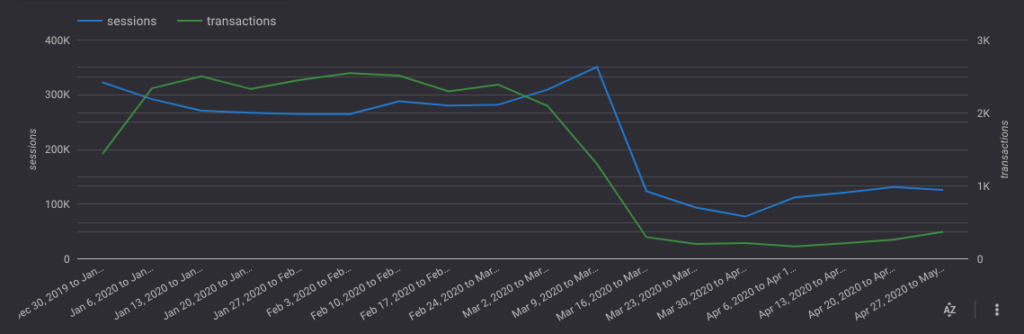
Looking across our portfolio of hotels we see that website sessions bottomed out at the end of March and have been steadily climbing since the week of April 6th. Chances are your hotel’s website visitors are returning and traffic is increasing indicating that consumers are in-market to research and book their next trip. Now is the time to make sure your hotel’s plan for reopening is present across your website including any new procedures and flexible cancellation policies to make travelers feel safe and secure with booking at your property.

*May 11th Update*
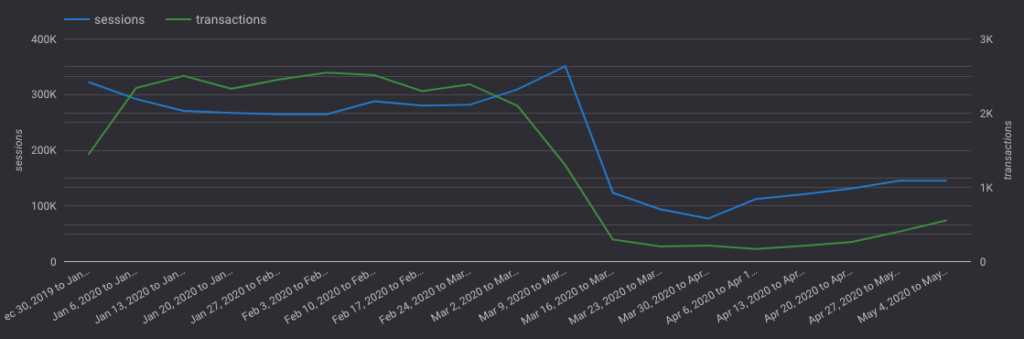
We continue to see transactions increase week over week while sessions have remained flat. Transactions increased by 37% for our clients week over week while sessions only increased by 0.09%.

2. Online Transactions & ECommerce Rates are Increasing
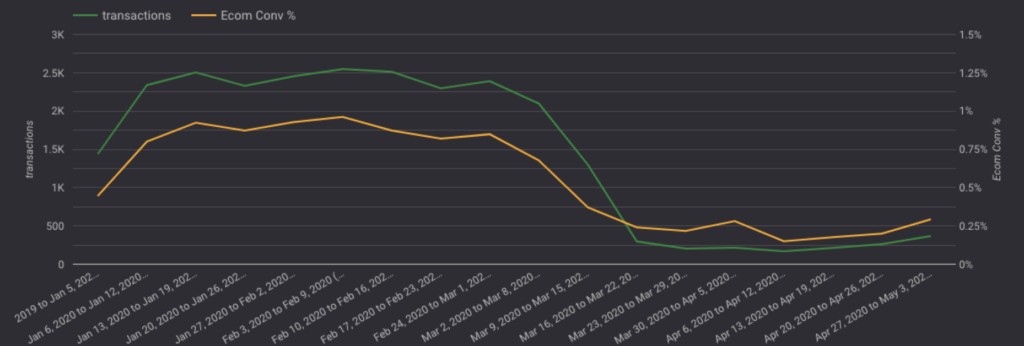
Many states have announced plans to slowly reopen, and some consumers are starting to see the rainbow at the end of the storm. The pot of gold for many people is that chance to reconnect with loved ones and revive their souls with travel. For most of our clients, transactions flatlined from the middle of March to early April. Once stimulus checks started to arrive in mid-April our hotel clients started to see transitions trickle in and they have been steadily increasing ever since. If your state is poised to reopen in the near future, now is the time to start advertising for your hotel again to capitalize on demand. Week-over-week we’re seeing a 25% increase in online transactions and a 30% increase in E-commerce conversion rates across our portfolio of clients.

*May 11 Update*
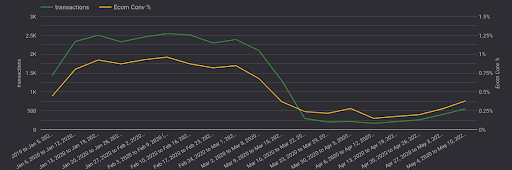
Week-over-week we’re seeing a 37% increase in online transactions and, since sessions remained relatively flat, a 36% increase in Ecommerce conversion rates across our portfolio of clients.

3. Our Clients Paid Search Averaged $3:1 ROAS in April

Although ROAS averages are still very low (down more than 50%) compared to pre-COVID-19 days, the majority of clients that are currently running paid search advertising are seeing transactions resulting in a portfolio-wide average of $3:1 for April. It is important to keep in mind that most conversions are for stays that are 60+ days out. As more states announce and solidify plans for reopening we expect to see this increase even more.

Now is the time to find the best deals on advertising platforms including Google Ads. Paid Search CPCs are at a low (down 15% on average YOY for our hotels' clients) as competition has declined significantly. Advertisers that relaunch now will be rewarded with lower CPCs to help drive more traffic for lower costs.

Although accommodations specific search volume has declined from pre-COVID levels, it is still present for branded and non-branded terms for hotels across different markets. Get in front of these potential guests now to influence bookings.

*May 11th Update*

Paid search ROAS has increased to an average of $6.30:1 from April 1st through May 12th, with a $10.50:1 for just the month of May. CPCs continue to show declines year over year, down 25% indicating that competition in the paid search ad space is still much lower than last year and presents a great value opportunity for advertisers right now.

4. Search Interest is Increasing For Some Markets

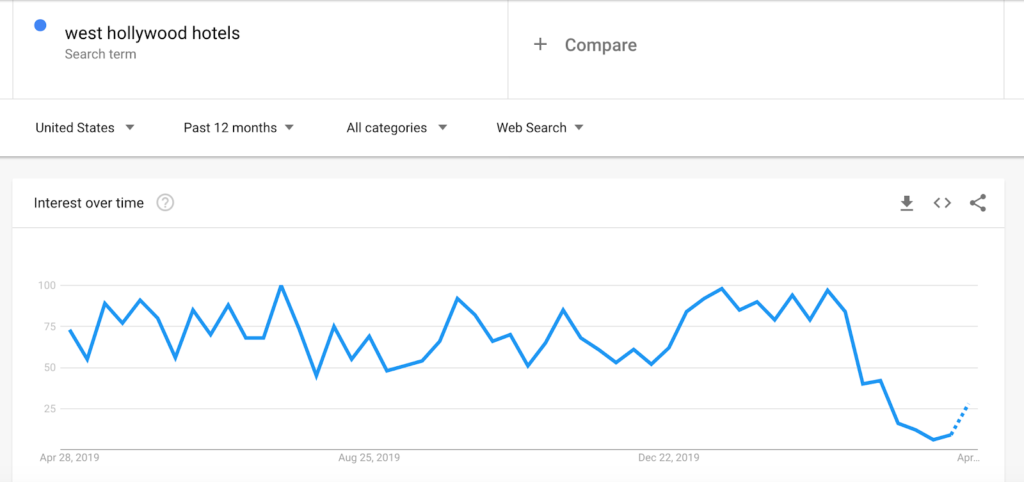
In March we witnessed the largest decline in search interest for accommodations terms that we can recall in the history of our company. Using Google Trends we can get a better understanding of current search interest for accommodation terms vs historical and pre-COVID-19 interest. It is important to note that some markets that have been hit the hardest will take longer to recover, as stay at home restrictions will last longer and travelers may still feel unsafe in traveling to those locations.

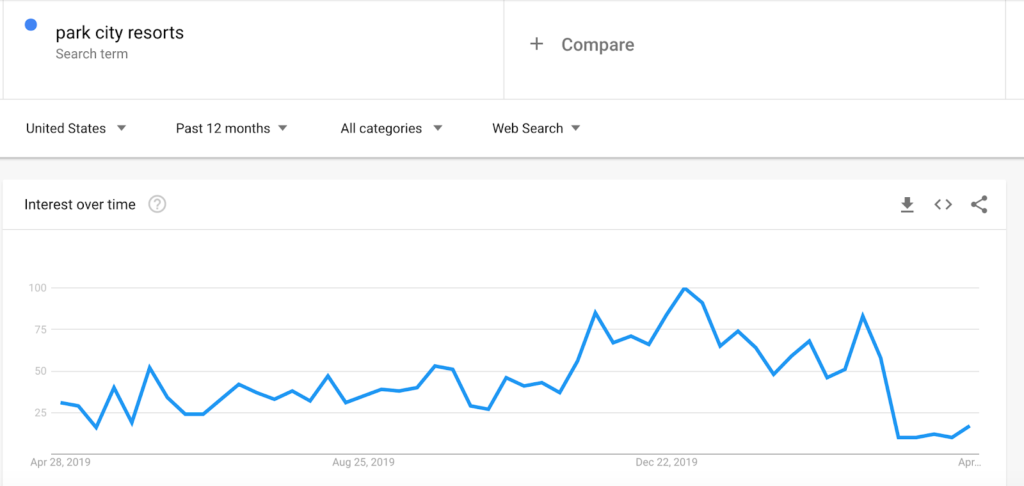
Here are a few examples showcasing search interest across different geographic markets. You’ll notice that after bottoming out in late March/early April, search interest for these accommodations terms has continued to increase steadily throughout the month.
*May 11th Update*
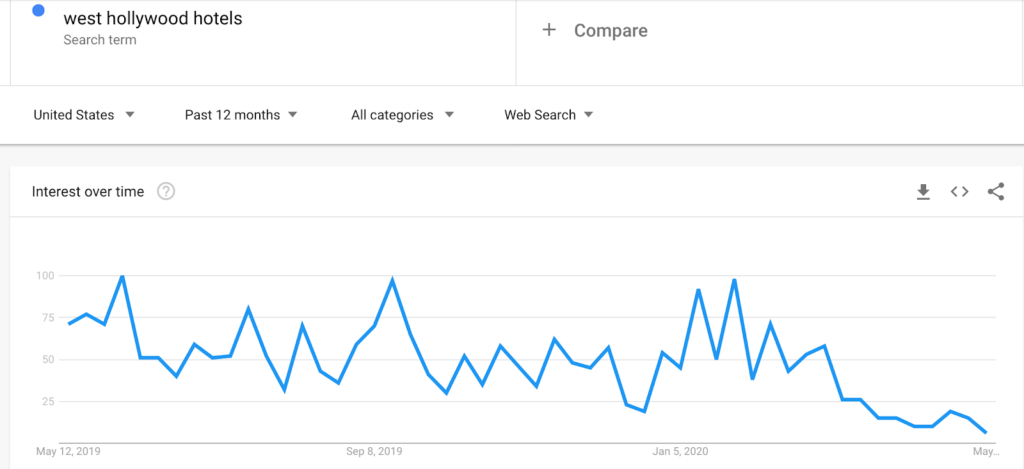
Google trends reporting a week over week search interest decline for “West Hollywood hotels”, going from 15/100 to 6/100.
*May 11th Update*
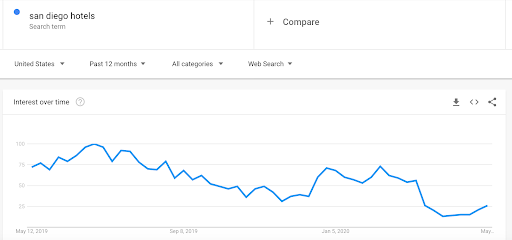
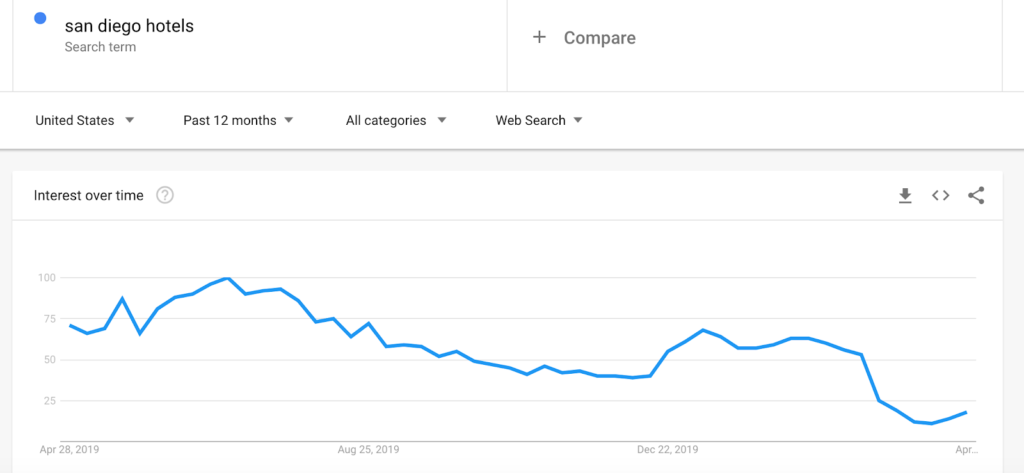
Week over week search interest increases on “San Diego hotels” from 19/100 to 26/100 - roughly 50% of where search interest was the same time last year.
*May 11th Update*
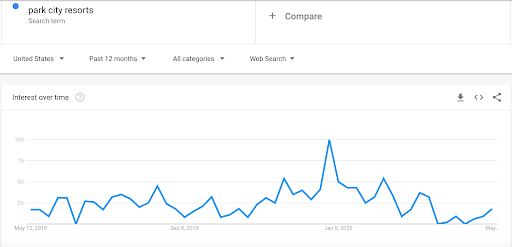
Week over week search interest increases on “Park City resorts” from 9/100 to 18/100 - in line to where search interest was at this time last year.

5. OTAs Have Started Paid Search Advertising Again

This week, Search Engine Land noted that several OTAs have resumed their paid search advertising, including Trivago, Booking.com, and Priceline. This may indicate that these travel companies are starting to see granular improvements and signs of increased interest from their own data. 

*May 11th Update*

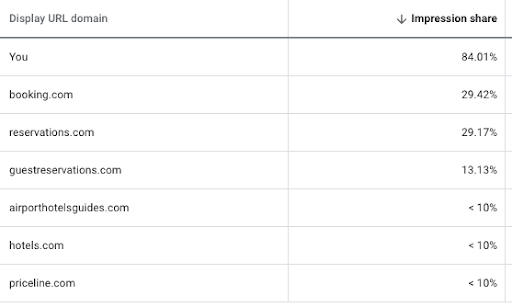
Clients running auction insights reports show OTAs (Booking.com, Priceline.com, Hotels.com) bidding on market terms for all markets but only branded terms for some clients. See example Auction Insights report below.
6. Local & Organic Impressions and Traffic are Increasing

Towards the end of April, many of our clients started to see an uptick in local organic impressions across search and maps.
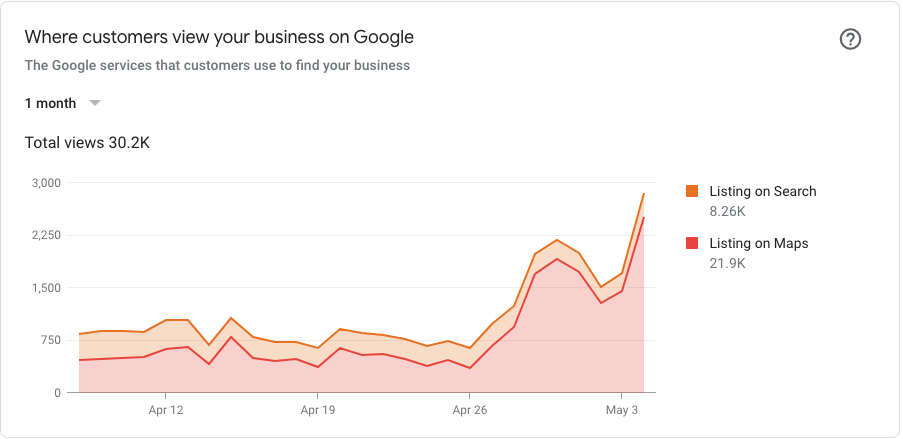
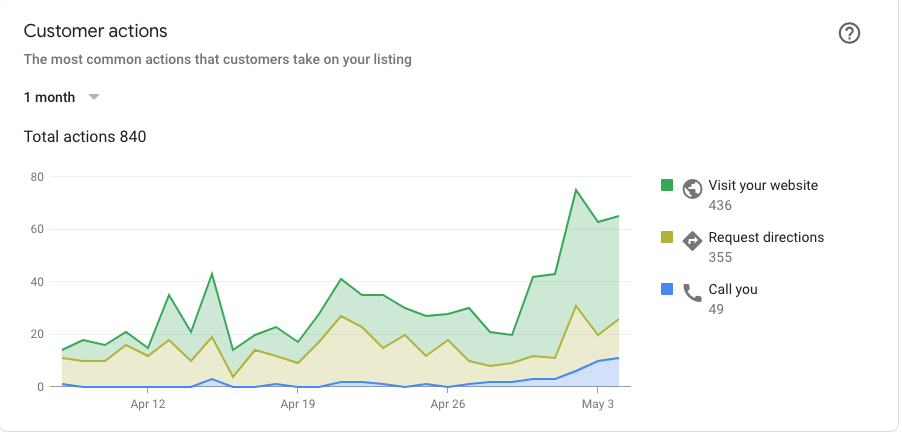
This increase in search impressions on Google has also resulted in increased traffic and other customer actions such as calls through their Google My Business listings.
*May 11th Update*

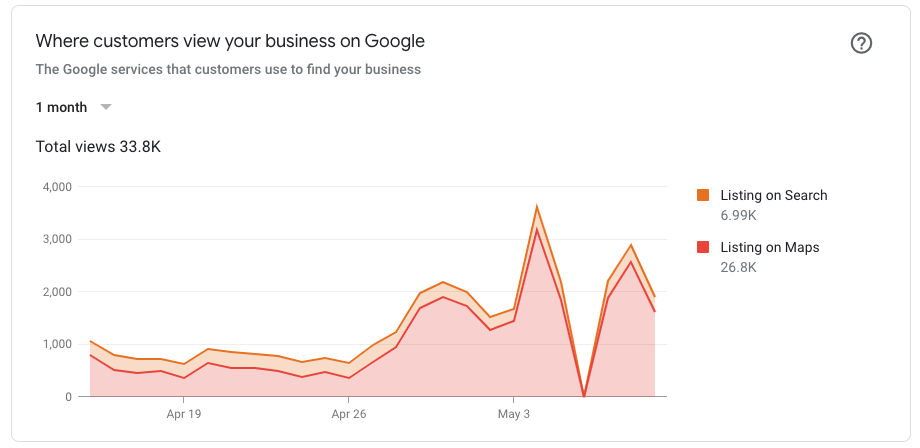
Reports show that some clients are maintaining the increased local organic views and customer actions reported last week. The steep decline on May 6th appears to be a glitch in Google My Business data available for that date.
We’ve also seen many clients' total organic sessions increase by at least 15% week over week, indicating an increased search interest in a combination of branded and market terms for these hotels.

As we start to see search volume increase for accommodations terms and governments relaxing stay at home orders in the next few weeks, pent up travel demand will evolve into bookings. Since total demand will still be much lower than pre-coronavirus days, hotels need to be ready and act quickly in order to capture the available demand. GCommerce strongly recommends that hotels in markets that show signs of opportunity prepare to go live with paid media in May. It will be extremely important that hotels clearly message their new cleaning policies, cancellation or change policies and more to make consumers feel secure enough to book at their property. 

If your hotel needs guidance on how or when to prepare to re-launch marketing please reach out to our hotel digital marketing specialists today.
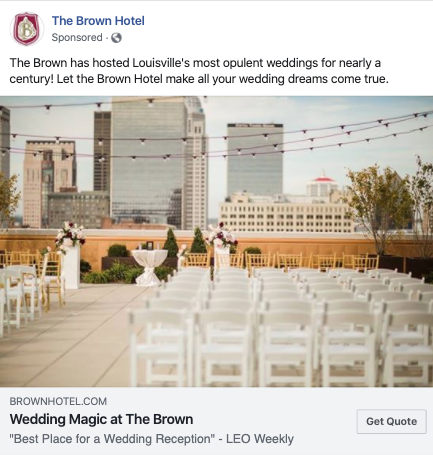
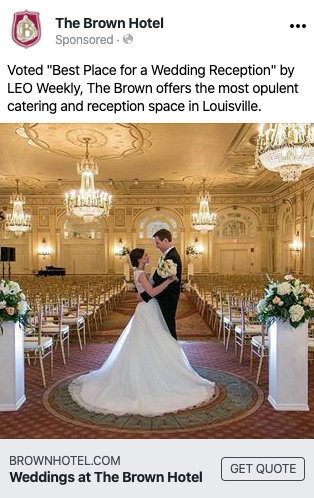
Facebook Wedding Ads Continue To Drive Leads During COVID-19

SHARE:

With so much uncertainty during these times, there is one thing that GCommerce is certain about - wedding requests for proposals continue to roll in for hotels. Now more than ever, people are on their devices, trying to find an escape, planning for brighter times ahead. While people are still planning for future wedding arrangements, don’t miss out on this opportunity to be in front of a highly qualified audience to drive wedding leads for your hotel. 

All of our clients running wedding lead campaigns right now are seeing leads continue to roll in. For example, one client is seeing significant increases MOM for wedding leads

In January, when the COVID-19 threat was still relatively low, the client collected an average amount of wedding leads. From there, as travel bans continued to become stricter, submissions continued to increase. 

In February the number of leads increased by 155%. 

In March, we saw another jump with a 35% increase in wedding leads.

How to Get More Wedding Leads for Your Hotel

GCommerce recommends a variety of tactics to help drive more wedding leads for your hotel but the channel that we see the most success with is social media campaigns. We recommend running Facebook wedding ad campaigns, testing lead generation campaign types and trying Instant Experience ads.

Facebook Lead Generation Wedding Ads for Hotels

Wedding lead generation campaigns look just like normal Facebook wedding ads, however, rather than sending a user to your hotel’s website, the ad will populate a request for proposal form for the user to complete. The information is exactly the same as it would appear on the RFP on your site and the fields can be customized. Wedding lead generation campaign ads tend to have a higher completion rate since the user never needs to leave or click through on the ad and the RFP form is populated directly to them based on their Facebook user information. Once the user completes the form and hits submit, an email notification will be sent to the determined list of employees from the property side with the info from the form. These are also collected within Facebook manager and you can download that list at any time.

Best Practices for Wedding Social Media Campaigns During COVID-19

Focus on the local drive market- At this point, the majority of our client’s wedding social media campaign leads are coming from a drive market radius and surrounding states. While air travel and travel bans are still fairly uncertain at this time, keep your targeting local, within a drive market radius for your social media wedding lead campaigns.

Expand or Revamp Your Hotel's Website Content- Our clients’ social media wedding campaign ads are still seeing a lot of great engagement with plenty of guests tagging others and leaving comments showing excitement. Although overall traffic is down YOY, in the past 30 days, we’re seeing that wedding landing pages have an increased average session duration and higher pages per session compared to the previous year. This shows that users are interested and are taking more time to explore hotel wedding venue content and details. They are also visiting additional pages on the hotel website once they leave the wedding page, perhaps F&B pages to learn more about culinary offerings, or room types for room blocks. Make sure the content on your hotel’s website is up to date, as these are positive user engagement metrics that users are exploring your site.

Interested in learning how GCommerce can increase your property’s wedding leads during this crisis and beyond? Reach out to your Account Executive today!

Planning for the Rebound | COVID-19

SHARE:

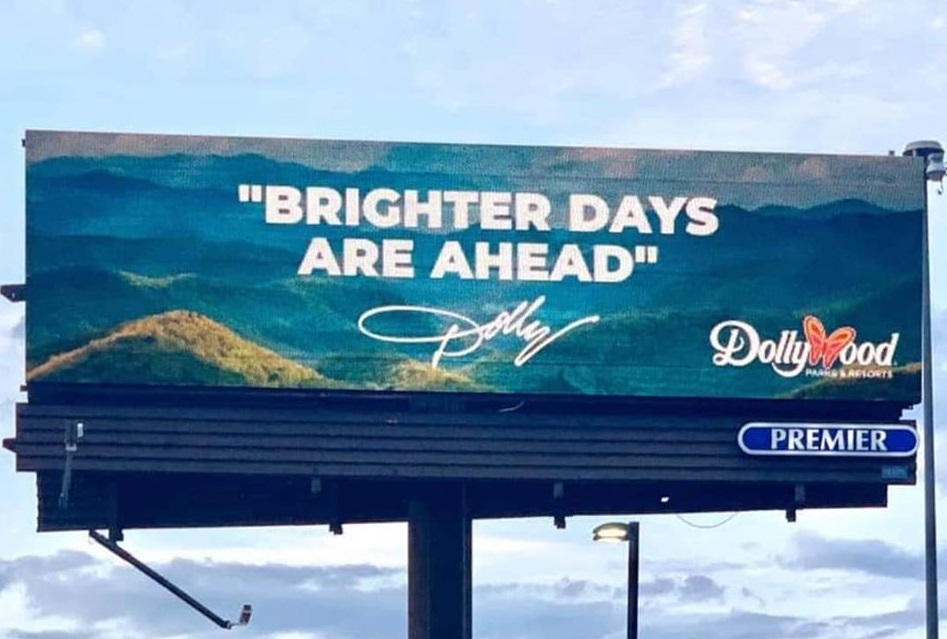
After an absolutely crazy couple of weeks, our dear friends at Dollywood’s DreamMore Resort & Spa shared this picture with us:

It was so refreshing to see this positive message that reminds us that the current coronavirus pandemic is not going to last forever. The entire world will bounce back. We just have to hang on, be kind and support one another while we get through this. Also, start to put our thinking caps on as to how best to be ready for the inevitable rebound of the travel industry. Whether your property is closed or remains open, there’s no better time than today to start thinking about how to adjust your hotel’s digital marketing strategy.

Here are the top 11 digital marketing tactics you should do to get your hotel ready for the rebound and get ahead of the competition:

  1. Be ready with drive market and staycation messaging. Think about it, how long will it be before you’re ready to get on a plane? 
  2. Geo-target your hotel’s digital marketing campaigns to focus on the drive market. Don’t spend money or effort reaching your fly-markets for a few more months. If they still want to come, they will find you. Right now, we need to penetrate the local market who can hop in their car and drive to your hotel.
  3. With the increase of people driving in cars, consider including free parking in a staycation package if you have that ability at your hotel.
  4. If you’ve followed some of our previous hotel marketing recommendations during coronavirus, you are most likely spending a minimal amount of ad dollars on paid search focusing on your brand terms. As we start to see specific markets rebounding, we will be adding keywords related to your specific neighborhood (i.e. Back Bay Boston Hotel) to your hotel’s paid search campaigns.
  5. Social media advertising is a great way to reach a geo-targeted audience for your hotel. Get creative and think about fun things that are specific to your property that can correlate to people desperately looking for a leisure getaway.
  6. Expand your hotel’s campaign retargeting list window - typically we set these to 30 days, but since people will be researching for months while they aren’t quite ready to book it is a great opportunity to reach a larger audience that is still interested in your property. Test increasing this to 90 days.
  7. Keep your Google My Business and other local directory listings updated as you change the hours and days that your hotel is open. This is the first place people are looking to see if a business is open.
  8.  If your hotel is in a destination where the outdoors play a part in the overall experience, find a way to creatively leverage this. After being stuck at home for so long, travelers will want to connect with nature and the fresh air if they can. 
  9. Get your hotel’s guest email database ready to reach out to your following with specific messaging. Think about the following past guest segments for your hotel:
    • Guests who had to cancel their plans and invite them back
    • Guests who live in your local drive market
    • People who had called for information between January and March did not book
    • Guests who have stayed at your property multiple times a year. They will expect you to talk to them differently since they have proven their loyalty.
  10. Continue to promote gift card purchases as a way loyal fans can help support your hotel’s business during this time.
  11. As much as you may not want to get into how you are ensuring your property is clean (because it’s always been clean), travelers are going to expect more communication around this in the future due to the coronavirus pandemic. If you don’t have information on your hotel’s website, in your pre-arrival communication and on-site, your guests may wonder if you aren’t taking this seriously.

Google My Business For Hotels: Functionality Updates During Coronavirus

SHARE:

Local SEO and accurate listings, especially Google My Business, are always critical to ensure your hotel’s business is best positioned within search engine results pages. The impacts of coronavirus on different industries are constantly changing and this extends to Google’s services including it’s Google My Business product. Over the past week, and it seems daily, the situation has been ever-evolving and strategy on this channel is having to pivot just as quickly. Some advice we gave last week is now irrelevant as Google continues to adjust functionality. Here’s what we know as of March 24, 2020 as it comes to Google My Business’ current product limitations for your hotel and how you can react.

1. Your hotel's business listing information edits/updates are delayed

Business listing information such as hours, photos, services, and attributes are not being approved as quickly as usual. All requested updates to Google My Business listings are reviewing and approved by Google before they go live. Priority is being given to businesses related to healthcare and other essential businesses. This doesn’t mean you should stop submitting updates and information to your listings. Continue to submit accurate updates as well as information around hotel attributes, services, photos and more. They will be posted, just delayed in going live.

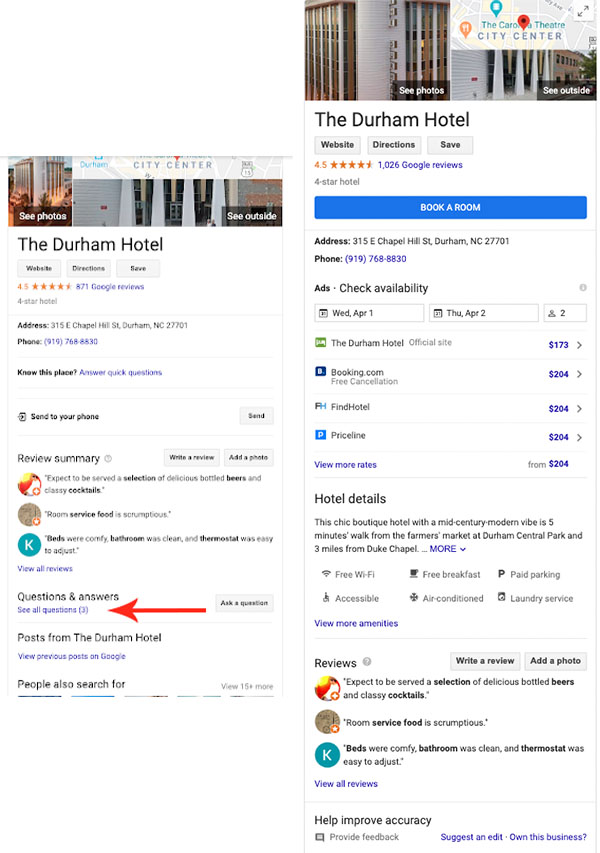
2. Google My Business Q&A feature is no longer visible (as of March 23, 2020)

In what appears to be in response to businesses being inundated with questions around coronavirus, Google has completely removed this section from the Google My Business knowledge panel. Google officially announced the removal of this section in its support website. Just last week Local SEO industry experts, including GCommerce, were recommending to post and answer business FAQ to this section. It appears the ability to display these to searchers and customers are now gone. Hotels should continue to use their own websites, email and social channels to keep customers up to date around updates to services and hours available during this time. View old knowledge panel with Q&A vs current knowledge panel examples below:

3. Google is pausing the ability to post new customer reviews & respond to reviews during this time

Although customers are still able to submit new reviews, Google has paused posting any new reviews during this time. It is unknown if Google will eventually make reviews posted during this time live in the future so it may be a good time to direct your loyal fans and past guests to post reviews on other channels such as Facebook or TripAdvisor.

4. Google Posts functionality is still present but industries like Hotels don’t get access to this functionality

Many industries’ businesses still have the functionality available to create new Google posts to keep customers up to date during this time, although there have also been some reports of issues with creating posts by some businesses. Unfortunately, Google Posts functionality has never been present for hotels. GCommerce recommends that hotels use their websites, email and social channels to continue to keep customers informed and connected during this time.

5. Restaurants Can Temporarily Include “Delivery Available” or “Takeout Available” to Business Names

Google has confirmed they are okay with restaurants temporarily adding the words “Delivery Available” or “Takeout Available” during this time to communicate updated business status. Normally this goes against Google’s policy guidelines but they are making special exceptions during this time. If your restaurant is still offering either of these during this time, GCommerce can assist in updating your business name to communicate to guests.

We Want To Help

Given the current, unprecedented times we are in, GCommerce expects the functionality and capabilities of Google My Business to be an ever-evolving situation. We will continue to stay on the pulse of what is happening and what the best approach is for hotel businesses during this time. Please reach out if we can be of assistance to your local business during this time.

If you’d like help identifying ways to help your hotel or property, we’re offering a free phone consultation, no strings attached.  We’ll interview you about your specific situation, your historical business mix and talk about actionable things you can do to drive bookings.

Contact Us

Coronavirus Impact On Hotels & A Plan For Recovery

SHARE:

What is the current digital marketing landscape for the hospitality industry? First, let’s summarize the larger impact of COVID-19 on the industry.

Current Impact of COVID-19 on the Hotel Industry

According to American Hotel and Lodging Association (AHLA), the hospitality industry has lost 1.5 billion in room revenue and is on pace to lose $1.4 billion per week due to COVID-19. In the last few days, we have received word that many hotels have either already closed their doors or are planning to in the immediate future, all due to the impact of COVID-19.

While these numbers are staggering, let’s take a look at what our hotel digital marketing data is telling us:

  • Ad dollars have dropped 23% between February and March 2020. This is directly due to there being less search volume and demand in each hotel’s market
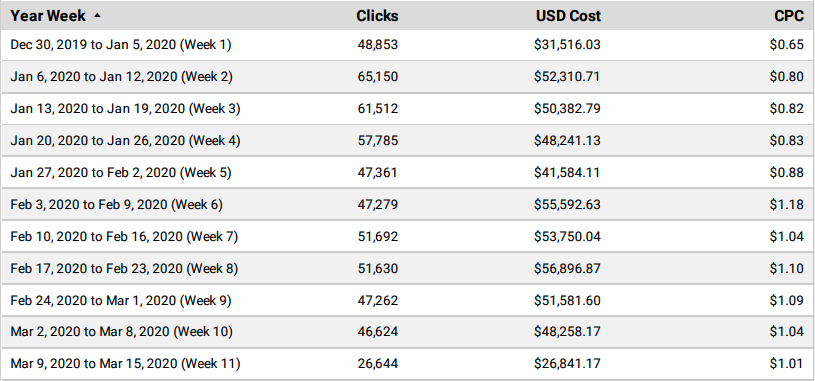
  • The average cost per click (CPC) has risen since January 1st, week over week:
  • The average number of transactions has decreased by 46% versus the same time last year with the same sample size

With that said, a different set of stats are telling us that there is light at the end of this dark tunnel:

  • Transactions are still occurring at almost every hotel. GCommerce is averaging a 130X ROAS across our portfolio for the month of March so far.
  • The average lead time between booking a reservation and the arrival date is 90 days. Travelers are dreaming, planning and looking forward to their summer vacation, especially after being quarantined.

Here’s How To Help Your Hotel Now During the COVID-19 Crisis

Even if your property is one of the ones who has had to shut their doors for a couple of weeks or a month, get ready to start pushing out messaging for late spring and summer travel. Here are ten hotel marketing tactics to start working on now to get your hotel ready:

  1. If you haven’t done so already, waive your cancellation fee policies for the time being. Travelers are looking to plan ahead and book travel, but if it’s not safe to do so they want to know they will be able to cancel without a penalty
  2. If your property is closing, let your hotel’s digital marketing agency or whoever manages your Google My Business listing know so you can update your “Open” status to “Temporarily Closed”
  3. If you’ve been waiting for that perfect time when your hotel isn’t full to schedule a photo or video shoot, now is a great time to start thinking about doing it in early summer
  4. Be ready with drive market and staycation messaging. Think about it, how long will it be before you’re ready to get on a plane?
  5. If you’re in a destination where the outdoors play a part in the overall experience, find a way to creatively leverage this. After being stuck at home for so long, travelers will want to connect with nature. (If you’re still open now and looking to find ways to get people to book for April travel, this is a great way to market your property.)
  6. Talk to your guests and be real with them. They no longer need to hear what you are doing on property to make it clean and safe. Send them email communication letting them know you’re planning for brighter days and can’t wait to see them soon. Even better, ask them what they want to see from the hotel to make them feel comfortable traveling. Co-creation is pure gold.
  7. Along the same lines, utilize social media to reach your audience acknowledging the situation but still remaining true to your brand. For a great example of this, check out Sunset Marquis’ social channels.
  8. Promote gift card purchases as a way loyal fans can help support your hotel’s business during this time
  9. Focus on updating your hotel’s website content and messaging to not only inform visitors on what the current status is but to help capitalize on any existing demand for direct bookings. Platforms like The Hotels Network are a great way to help customize messaging for the segments that are still showing interest in your hotel.
  10. At GCommerce, we’re using this time to deep dive into our search engine optimization efforts while paid media is lower than usual. If you handle this in-house or use an outsource, ask them what can be done to expand your content and increase your ranking for relevant keywords and topics.

If you’re looking for help to get your hotel’s marketing ready for life after COVID-19, reach out to GCommerce. We’re ready to get started.

Contact Us

Flywheel News: Your Top 6 Hotel Digital Marketing Updates From February 2020

SHARE:

Even with an extra day, February seemed to be over in the blink of an eye and we’re now rolling through 2020 at full speed. Let’s slow down for a few minutes to review all of the exciting hotel digital marketing news from February 2020.

1. Google Announces Changes to Google Ads Partner Status Requirements

The biggest news to hit agencies in February is hands down the announcement from Google to changes in its requirements to qualify as a Google Ads Partner. The new requirements go into effect in June and include:

  • 90-day minimum spend requirement doubling
  • At least 50% of account users must be certified
  • Must hit 70% account optimization score as tracked by Google

GCommerce is already well-positioned to maintain Google Partner certification regardless of these changes. The big moral dilemma facing agencies, including GCommerce, moving forward is when Google’s optimization score campaign recommendations conflict with the best interests of the client for performance. We’ve always gone through Google’s recommendations with a fine-tooth comb because we understand Google’s ultimate goal is to drive more campaign spend while we are concerned with the clients’ specific objectives. GCommerce’s paid search approach will continue to be focused on the client’s best interests for performance and KPIs, even if those conflict with Google’s account optimization recommendations.

2. Google Launches New Local SERP in Europe

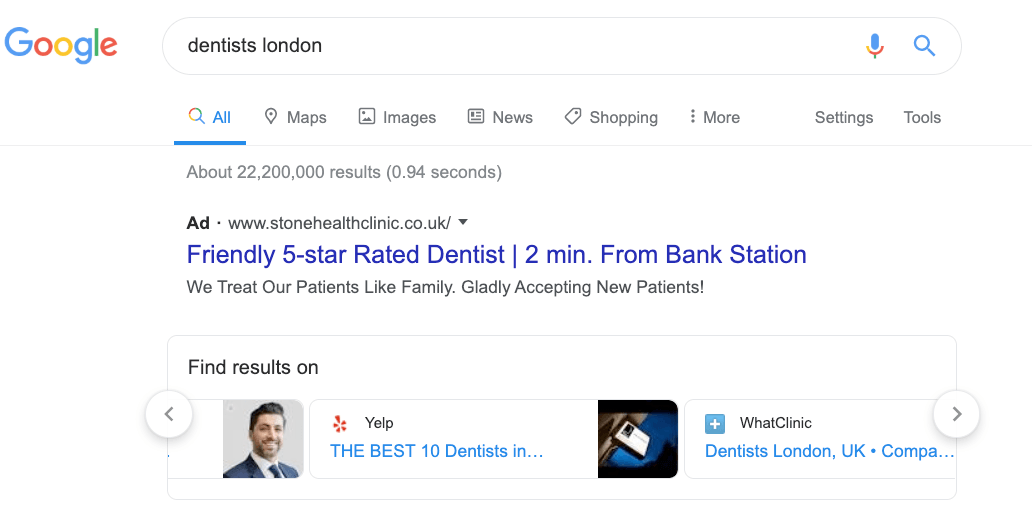
Google has launched a new local SERP in the UK in response to EU antitrust decisions. As seen in the below screenshot from Search Engine Land’s article:

Google has started to include directory listing link features at the top of the SERP to give visibility to other directories such as Yelp. It will be interesting to watch this continue to unfold within the EU across different Google SERPs. If your business is located in the EU and is impacted by local search, you should keep an eye on traffic from these subdirectories in relation to your Google and GMB traffic.

3. Google Maps Turns 15!

You may be saying, “great, but why is this important”? Google Maps has become ingrained in our daily lives as consumers but also as hotel marketers. It is linked with Google My Business and helps drive local search proximity signals, local impressions, and exposure for businesses. It is second to only Google’s search product in importance and Google continues to invest in it.  Search Engine Land’s article states “According to data from GatherUp and ThriveHive, Google Maps is now driving significantly more local impressions than Google search.” Local search is extremely important to hotels and GCommerce continues to focus on ensuring client pages are optimized in GMB and they are focusing on signals that can impact exposure on this channel.

4. Ads Standards Updated by Coalition for Better Ads

In a change that could mean issues for some YouTube ad formats, the Coalition for Better Ads announced that “Chrome will stop showing ads on sites that repeatedly show” disruptive ad formats. This means consolidation to ad formats that are less of an annoyance which should be a positive impact for consumers and for advertiser performance. These standards look to prevent issues around the increase of consumers blocking ads on browsers. According to Search Engine Land, “ad blocker rates in North American and Europe have declined modestly from their peak in mid-2017” showing that these steps by the Coalition for Better Ads could be having a positive impact.

5. Chrome SameSite Changes Take Effect

If you read our recent blog on the rise of data regulation and the impact on hotel marketing you may recall seeing a timeline event for February 2020 called Google’s SameSite change. This is the first step in Chrome’s move to end support of 3rd party cookies by 2022. According to Search Engine Land, “this change also makes it easier for browsers creators to grant the users options to manage third-party cookies and first-party cookies independently”. It’s another change felt by the impact of data regulation on the web to make it a safer space for users and giving them more control over how their data is tracked and used. GCommerce has confirmed with our technology partners that we are prepared for this setting change. Over the past months, we’ve made updates to our tracking for Google Marketing Suite and other platforms to follow revised best practices and ensure tracking remains as accurate as possible.

6. Facebook Plans Shut Down of Mobile Web Arm in Response to Data Regulation Changes

The second digital marketing news article this month related to data regulations changes from the browser companies, Facebook announced they are planning to shut down the mobile web arm of their Audience Network feature this April. Digiday is stating that “sources said the decision was likely fueled by browser companies’ recent changes to throttle cookies...plus the internal resources required to keep on top of potential negative impacts from new data regulations”.  Facebook’s Ad Network is featured as inventory in the current Ads Manager platform. It’s presence and impact on GCommerce client campaigns is minimal as most inventory and performance is driven through in-app inventory. While this might have a slight impact on Facebook Ads campaigns, it should be minimal at best.

Keep Reading